

How to Create a Daily Schedule That Actually Works (Step-by-Step Productivity Guide 2026)
Have you ever created the “perfect” daily schedule, only to abandon it within a few days? You’re not alone. Most daily schedules fail because they’re overloaded with tasks, too rigid, and don’t account for real life. Unexpected interruptions, low-energy moments, and unrealistic expectations quickly turn even the best plans into frustration.
The truth is, productivity isn’t about cramming more into your day; it’s about creating a structure that actually works with your lifestyle. A well-designed schedule helps you stay focused, reduce stress, and make consistent progress without feeling overwhelmed. Instead of guessing what to do next, you follow a clear plan that guides your day efficiently.
Table of Contents
In this guide, you’ll learn how to create a daily schedule that is practical, flexible, and backed by proven productivity principles. Rather than forcing yourself into a strict routine, you’ll discover a smarter approach that adapts to your energy levels, priorities, and real-world demands; so you can finally stay consistent and get things done.
Why Most Daily Schedules Don’t Work
Creating a daily schedule sounds simple, but sticking to one is where most people struggle. The problem isn’t a lack of motivation; it’s often the way schedules are designed. Many people unknowingly build plans that are unrealistic, inflexible, and disconnected from how they actually function day to day.
Understanding these common mistakes is the first step toward learning how to create a daily schedule that truly works.
Overloading Your Day with Tasks
One of the biggest mistakes is trying to fit too much into a single day. It’s tempting to create a packed to-do list filled with ambitious goals, but this often leads to disappointment.
When your schedule is overloaded:
- Tasks take longer than expected
- You feel constantly behind
- Stress and burnout increase
Instead of boosting productivity, an unrealistic schedule drains your energy and motivation. A good schedule should be achievable, not overwhelming.
Ignoring Energy Levels
Not all hours in your day are equal. Everyone has natural energy peaks and dips, yet many schedules ignore this completely.
For example:
- Doing deep, focused work when you’re tired
- Scheduling simple tasks during your most productive hours
This mismatch reduces efficiency and makes tasks feel harder than they should. To truly master how to create a daily schedule, you need to align important tasks with your peak energy periods.
Lack of Flexibility
Life is unpredictable. Meetings run late, unexpected tasks pop up, and sometimes you just need a break. Rigid schedules don’t allow for these realities.
When your schedule lacks flexibility:
- One small delay can ruin your entire day
- You feel frustrated when things don’t go as planned
- You’re more likely to give up completely
A productive schedule should guide you, not control you. Building in buffer time and allowing adjustments is key to making your routine sustainable in the long run.
Benefits of Learning How to Create a Daily Schedule

When you truly understand how to create a daily schedule, it becomes more than just a productivity tool; it transforms how you manage your time, energy, and life. Instead of feeling overwhelmed or scattered, you gain clarity and control over your day.
Here are the key benefits that make it worth the effort:
Improved Focus and Time Management
A well-structured schedule helps you stay on track by giving every task a clear place in your day. Instead of constantly wondering what to do next, you can focus fully on the task at hand.
This leads to:
- Fewer distractions
- Better use of your time
- Higher-quality work
Reduced Stress and Decision Fatigue
Making decisions all day can be exhausting. Without a plan, you’re constantly choosing what to do next, which drains your mental energy.
A daily schedule eliminates that pressure by:
- Pre-planning your tasks
- Reducing last-minute decisions
- Creating a sense of control and calm
Better Work-Life Balance
Without a schedule, work can easily take over your entire day. A proper plan ensures that both productivity and personal time are prioritized.
You’ll be able to:
- Set clear boundaries between work and rest
- Make time for family, hobbies, and self-care
- Avoid overworking and burnout
Increased Productivity and Consistency
Consistency is the foundation of success. When you follow a daily schedule, even small actions add up over time.
With the right system, you can:
- Build productive habits
- Stay consistent with your goals
- Achieve more without feeling overwhelmed
Mastering how to create a daily schedule isn’t about perfection: it’s about creating a system that helps you show up consistently and make progress every single day.
Step-by-Step Guide on How to Create a Daily Schedule
Creating a schedule that actually works doesn’t require perfection; it requires a smart system. This step-by-step guide will show you exactly how to create a daily schedule that is realistic, flexible, and easy to follow.
Step 1 – Identify Your Priorities
Before you start planning your day, you need to know what truly matters.
- Define your top 3-5 daily goals
- Focus on tasks that move you closer to your long-term objectives
- Separate urgent tasks from important ones
This helps you avoid wasting time on low-value activities and ensures your day is meaningful and productive.
Step 2 – Track Your Time
You can’t improve your schedule if you don’t understand how you currently spend your time.
- Observe your daily activities for a few days
- Identify time-wasting habits or distractions
- Use apps, timers, or simple journaling to track your time
This step gives you a clear picture of where your time goes and where you can improve.
Step 3 – Choose a Scheduling Method
Not all schedules work the same way. Choose a method that fits your lifestyle and work style.
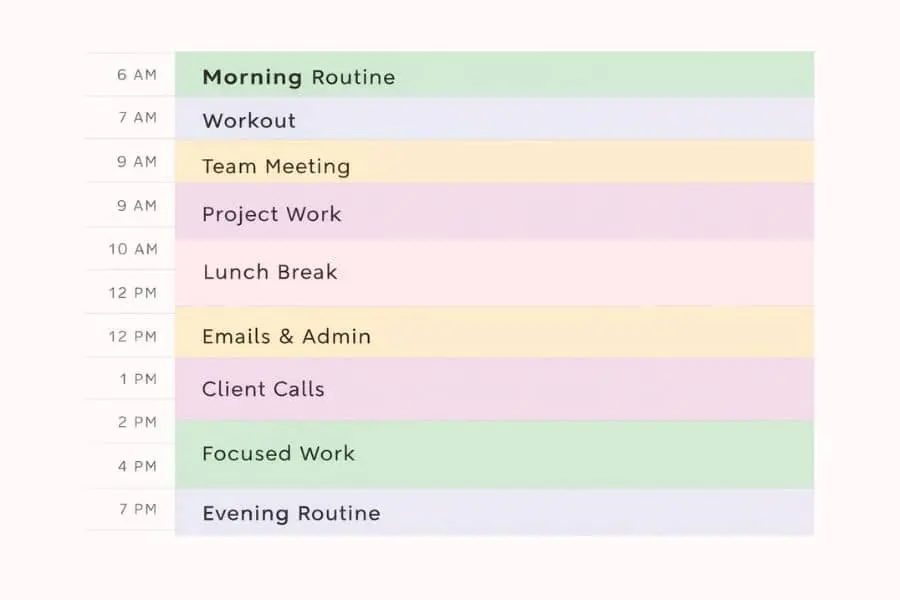
- Time Blocking: Assign specific time slots for each task
- Task Batching: Group similar tasks together
- Pomodoro Technique: Work in focused intervals (e.g., 25 minutes work + 5 minutes break)
Experiment with these methods to find what works best for you.
Step 4 – Allocate Time Blocks
Now it’s time to build your actual schedule.
- Assign realistic time slots for each task
- Avoid underestimating how long things take
- Add buffer time between activities to handle delays
A balanced schedule should feel achievable, not overwhelming.
Step 5 – Optimize for Energy Levels
Your productivity depends heavily on your energy, not just your time.
- Schedule deep, focused work during your peak energy hours
- Use low-energy periods for simple or routine tasks
- Pay attention to when you feel most alert during the day
Aligning tasks with your energy levels makes your schedule far more effective.
Step 6 – Add Breaks and Rest Time
Breaks are not a waste of time; they are essential for sustained productivity.
- Take short breaks between work sessions
- Include time for meals, relaxation, and movement
- Avoid working nonstop, which leads to burnout
Rest helps you recharge and maintain focus throughout the day.
Step 7 – Review and Adjust Daily
A great schedule evolves over time.
- Reflect on what worked and what didn’t at the end of the day
- Adjust your schedule based on real experience
- Continuously improve your planning process
Learning how to create a daily schedule is not a one-time task; it’s an ongoing process that gets better with consistency.
By following these steps, you’ll create a schedule that adapts to your life, supports your goals, and helps you stay productive without feeling overwhelmed.
Best Tools to Create a Daily Schedule in 2026
Having the right tools can make a huge difference when learning how to create a daily schedule that’s easy to follow and maintain. Whether you prefer digital solutions or traditional methods, there are plenty of effective options available in 2026.
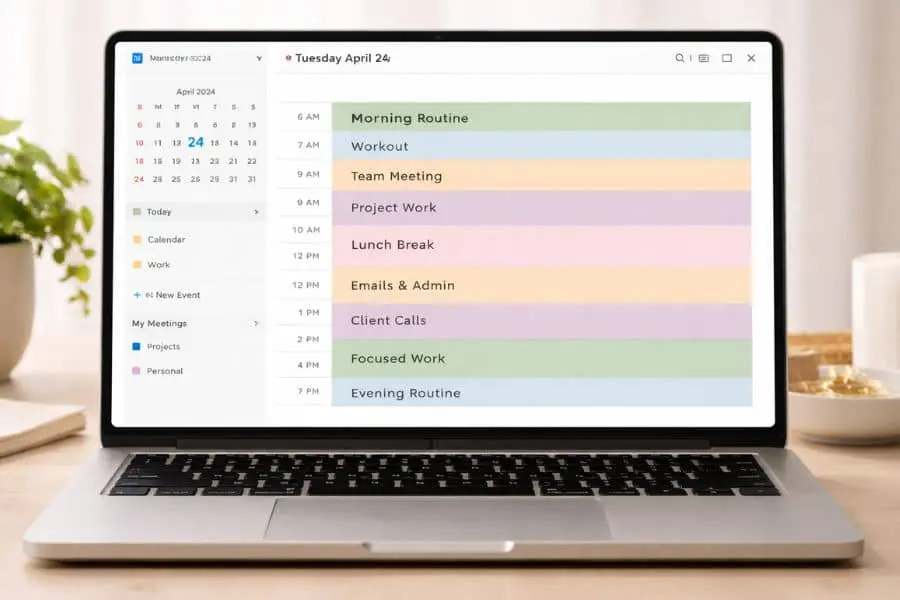
Digital Tools (Google Calendar, Notion, Todoist)
Digital tools are the most popular choice because they are flexible, accessible, and easy to update in real time.
- Google Calendar
- Ideal for time blocking and scheduling events
- Syncs across devices and integrates with other apps
- Helps you visually organize your entire day
- Notion
- An all-in-one workspace for planning, notes, and task management
- Highly customizable with templates, databases, and calendars
- Great for building a complete productivity system
- Todoist
- Simple and powerful task manager
- Lets you create, organize, and prioritize daily tasks with reminders
- Supports recurring tasks and collaboration
These tools are especially useful because they allow you to adjust your schedule instantly and stay organized on the go.
Printable Planners
If you prefer a more hands-on approach, printable planners are a great alternative.
- Help you stay focused without digital distractions
- Encourage intentional planning and reflection
- Easy to customize based on your routine
Many people find that physically writing their schedule improves clarity and commitment.
Time-Tracking Apps
Time-tracking tools help you understand how your day actually unfolds, so you can improve it.
- Apps like Toggl or RescueTime track how you spend your time
- Provide insights into productivity patterns and distractions
- Help you refine and optimize your schedule over time
For example, time-tracking apps allow you to identify inefficiencies and adjust your workflow for better results .
Choosing the right combination of tools depends on your lifestyle. Some people prefer a simple notebook, while others rely on powerful digital systems. The key is to pick tools that make how to creating a daily schedule easier, not more complicated.
Sample Daily Schedule for Maximum Productivity
Sometimes the easiest way to understand how to create a daily schedule is by seeing a real example. Below are simple, practical schedules you can adapt based on your lifestyle, goals, and energy levels.

Example for Students
A student’s schedule should balance study time, breaks, and revision to improve focus and retention.
Sample Schedule:
- 6:30 AM – 7:30 AM: Wake up, morning routine, breakfast
- 7:30 AM – 9:30 AM: Deep study session (high-focus subjects)
- 9:30 AM – 10:00 AM: Break (rest, light activity)
- 10:00 AM – 12:00 PM: Classes / second study block
- 12:00 PM – 1:00 PM: Lunch + relaxation
- 1:00 PM – 3:00 PM: Light study / assignments
- 3:00 PM – 4:00 PM: Break / exercise / hobbies
- 4:00 PM – 6:00 PM: Revision or practice
- Evening: Free time, family, entertainment
- 10:00 PM: Wind down and sleep
Why it works:
- Focuses on high-energy study sessions in the morning
- Includes regular breaks to prevent burnout
- Allocates time for revision and relaxation
Example for Working Professionals
A professional schedule should balance work tasks, meetings, and personal life.
Sample Schedule:
- 6:00 AM – 7:00 AM: Morning routine, exercise
- 7:00 AM – 9:00 AM: Deep work (important tasks, no distractions)
- 9:00 AM – 12:00 PM: Meetings and collaborative work
- 12:00 PM – 1:00 PM: Lunch break
- 1:00 PM – 3:00 PM: Focused work / task completion
- 3:00 PM – 3:30 PM: Break
- 3:30 PM – 5:30 PM: Light tasks, emails, planning
- Evening: Family time, hobbies, relaxation
- 10:30 PM: Sleep
Why it works:
- Prioritizes deep work during peak productivity hours
- Groups meetings together to reduce interruptions
- Maintains a healthy work-life balance
These examples are not meant to be followed exactly. The key to mastering how to create a daily schedule is to adjust these templates based on your personal routine, responsibilities, and energy levels.
Tips to Stick to Your Daily Schedule
Creating a schedule is one thing; sticking to it is another. The real challenge in mastering how to create a daily schedule is building consistency over time. These simple strategies will help you stay on track without feeling overwhelmed.
Start Small and Build Gradually
Trying to completely overhaul your day overnight often leads to failure.
- Begin with a few key tasks or time blocks
- Gradually add more structure as you get comfortable
- Focus on consistency rather than doing everything at once
Small wins build momentum and make your schedule sustainable.
Avoid Perfectionism
No schedule will ever go exactly as planned, and that’s okay.
- Accept that some days will be less productive
- Don’t give up just because you missed a task
- Focus on progress, not perfection
A flexible mindset is essential for long-term success.
Use Reminders and Alarms
It’s easy to lose track of time, especially when you’re busy or distracted.
- Set reminders for important tasks
- Use alarms to switch between activities
- Leverage apps or phone notifications
These tools act as gentle nudges to keep your day on track.
Reward Yourself for Consistency
Positive reinforcement can make a big difference.
- Treat yourself after completing important tasks
- Celebrate small achievements
- Create incentives to stay motivated
When your schedule feels rewarding, you’re more likely to stick with it.
Common Mistakes to Avoid When Creating a Daily Schedule
Even with the best intentions, certain mistakes can make your schedule ineffective. Avoiding these will help you refine how to create a daily schedule that truly works.
Scheduling Every Minute
Filling every second of your day leaves no room for flexibility.
- Unexpected tasks will disrupt your plan
- You may feel overwhelmed and restricted
- Productivity can actually decrease
Instead, leave gaps in your schedule for adjustments.
Ignoring Personal Time
A schedule focused only on work is not sustainable.
- You need time for rest, hobbies, and relationships
- Lack of balance leads to burnout
- Personal time improves overall productivity
Make sure your schedule supports your well-being, not just your tasks.
Not Reviewing Progress
If you don’t review your schedule, you won’t know what’s working.
- Reflect on your day regularly
- Identify what needs improvement
- Adjust your schedule accordingly
Continuous improvement is key to long-term success.
Trying to Copy Others’ Routines
What works for someone else may not work for you.
- Everyone has different goals, energy levels, and responsibilities
- Copying others can lead to frustration
- Your schedule should fit your life
The best approach to how to create a daily schedule is to build one that’s personalized and realistic for you.
Conclusion
Creating a schedule that truly works isn’t about filling every minute of your day; it’s about building a system that supports your goals, energy, and lifestyle. In this guide, you’ve learned how to create a daily schedule by identifying priorities, choosing the right methods, managing your time effectively, and avoiding common mistakes.
Remember, productivity doesn’t come from perfection. It comes from showing up consistently, making small improvements, and adjusting your routine as you go. Even a simple, flexible schedule can have a powerful impact when you stick to it over time.
What You Should Do Next
Now it’s your turn.
Start creating your schedule today using these steps and take control of your time.
If you found this guide helpful, share your thoughts or your own scheduling tips in the comments.
Don’t forget to bookmark this page or download a template so you can easily come back and refine your routine anytime.
Your most productive days start with a plan. Make yours count.
FAQs
What is the best way to start learning how to create a daily schedule?
The best way to start is by identifying your top priorities and tracking how you currently spend your time. Once you understand your habits, you can begin organizing tasks into simple time blocks that match your energy levels.
How detailed should a daily schedule be?
A daily schedule should be structured but not overly strict. Instead of planning every minute, focus on key time blocks for important tasks, breaks, and personal time. Flexibility is important to handle unexpected changes.