
Top Skills Employers Will Demand in 2026
The modern workplace is changing faster than ever. Advances in artificial intelligence, automation, and remote collaboration tools are transforming how companies operate and how employees contribute. Especially in developed countries, businesses are rapidly shifting to digital-first environments where adaptation and innovation are more important than traditional qualifications.
As industries evolve, employers are no longer just looking for degrees or years of experience. Instead, they prioritize professionals who possess the top skills needed to thrive in a technology-driven world. These skills include a mix of technical abilities, critical thinking, communication, and emotional intelligence.
Table of Contents
For professionals who want to stay competitive in 2026 and beyond, developing the top skills employers value most is essential. Whether you’re starting your career, changing industries, or aiming for leadership roles, building the right skills can open doors to better opportunities and long-term career growth.
In this guide, we’ll explore the top skills employers look for in 2026, why they matter, and how you can start developing them today to future-proof your career.
Why Learning Top Skills Matters in 2026
The workplace is evolving at a rapid pace, and employers are adapting their hiring strategies to keep up with these changes. New technologies, digital transformation, and global competition are reshaping how businesses operate. As a result, companies are no longer hiring based solely on traditional qualifications. Instead, they are searching for candidates who possess the top skills needed to navigate modern challenges and contribute to long-term business growth.
Learning the top skills in 2026 is not just about staying relevant; it’s about staying competitive. Professionals who continuously upgrade their abilities are more likely to secure better job opportunities, earn promotions, and remain valuable in a fast-changing job market.
The Impact of AI and Automation on Jobs
Artificial intelligence and automation are transforming many industries by handling repetitive and routine tasks. Tools powered by AI can now analyze large datasets, automate workflows, and assist with decision-making. While these technologies improve efficiency, they are also changing the nature of many job roles.
Because of this shift, employees must focus on developing top skills that complement technology rather than compete with it. Human-centric abilities such as critical thinking, creativity, emotional intelligence, and complex problem-solving are becoming more valuable than ever. Workers who can combine technical understanding with these human skills will be better prepared to work alongside AI-driven systems.
The Growing Demand for Adaptable Professionals
In a rapidly evolving workplace, adaptability has become one of the most important top skills employers look for. Businesses want professionals who can quickly learn new tools, adjust to new systems, and respond effectively to changing market demands.
Employees who embrace continuous learning and stay curious about new technologies often stand out to employers. Adaptable professionals are more capable of handling uncertainty, managing change, and helping organizations innovate. As industries continue to evolve in 2026 and beyond, those who develop flexible mindsets and growth-oriented skills will remain highly valuable in the job market.
Top Skills Employers Look for in 2026
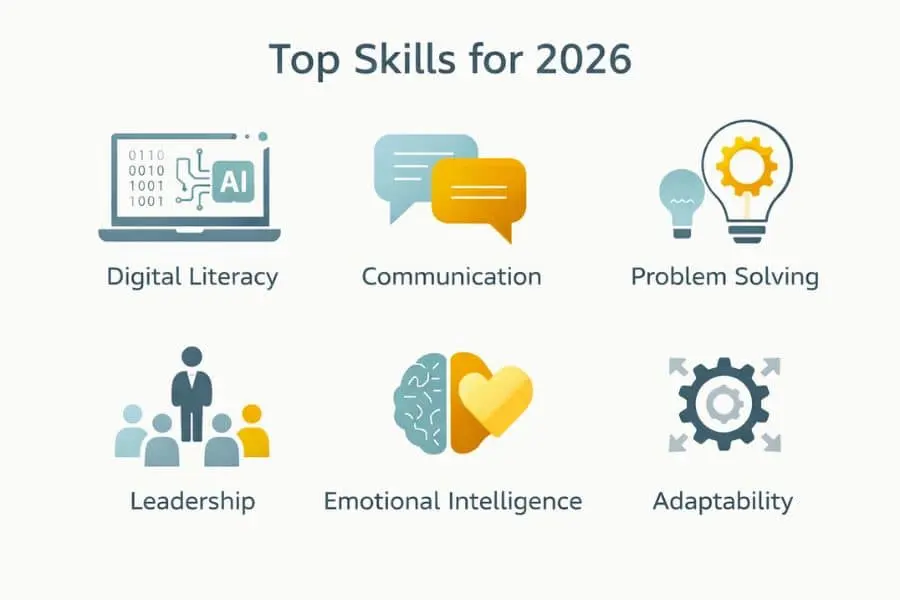
As the workplace continues to evolve, employers across industries are focusing on candidates who possess a blend of technical knowledge and human-centered abilities. These top skills help professionals adapt to technological advancements, collaborate effectively, and solve complex problems in modern work environments. Whether you work in technology, healthcare, finance, or marketing, developing these skills can significantly improve your career prospects in 2026.
Digital Literacy and AI Skills

Digital literacy has become one of the most essential top skills in today’s job market. Employees are expected to understand how digital tools, cloud platforms, and artificial intelligence systems support business operations.
Having basic knowledge of AI-powered tools, automation software, and digital collaboration platforms allows professionals to work more efficiently. Understanding how to use these technologies, rather than being replaced by them, helps employees stay valuable and productive in modern workplaces.
Critical Thinking and Problem Solving
Critical thinking is another key skill employers prioritize in 2026. Organizations face increasingly complex challenges, and they need professionals who can analyze situations carefully and make smart decisions.
Employees with strong problem-solving abilities can evaluate data, identify patterns, and develop practical solutions. This skill helps businesses improve processes, reduce risks, and make better strategic decisions.
Communication Skills

Strong communication remains one of the most important top skills in every industry. Professionals must be able to clearly express ideas through writing, presentations, and conversations.
With remote and hybrid work becoming common, effective communication is even more important. Employees need to collaborate with colleagues through emails, video meetings, messaging platforms, and project management tools. Clear and professional communication helps teams stay aligned and productive.
Emotional Intelligence (EQ)
Emotional intelligence is a powerful skill that helps professionals understand and manage their own emotions while also recognizing the feelings of others. Employers value individuals who demonstrate empathy, teamwork, and strong interpersonal abilities.
Professionals with high emotional intelligence often build better relationships with coworkers, manage conflicts effectively, and contribute to positive workplace cultures. These qualities are especially important for leadership and team-based roles.
Adaptability and Continuous Learning
In a fast-changing world, adaptability is one of the most valuable top skills employees can develop. New tools, technologies, and work processes appear frequently, requiring professionals to stay flexible and open to change.
Continuous learning allows individuals to upgrade their knowledge and stay relevant in their careers. Employers appreciate workers who actively seek opportunities to learn new skills, complete training programs, and improve their expertise.
Data Analysis and Tech Awareness
Data plays a major role in business decision-making today. Employers are increasingly searching for professionals who can interpret information and extract meaningful insights.
Understanding basic data analysis, dashboards, and reporting tools helps employees make data-driven decisions. Even in non-technical roles, having awareness of analytics and technology trends is becoming one of the top skills needed to succeed in modern workplaces.
How to Develop These Top Skills
Understanding the top skills employers look for in 2026 is only the first step. The next step is actively developing those skills so you can stay competitive in the modern job market. Fortunately, there are many practical ways to start building these abilities today. With consistent effort and the right learning strategy, anyone can improve their professional skill set.
Below are several actionable methods you can begin using immediately to strengthen your top skills and prepare for future career opportunities.
Take Online Courses and Certifications
One of the most effective ways to develop top skills is through online courses and professional certifications. Many learning platforms offer flexible programs that allow you to study at your own pace while gaining industry-relevant knowledge.
Courses focused on digital literacy, AI tools, communication, leadership, and data analysis can significantly improve your professional capabilities. Certifications also demonstrate to employers that you are committed to continuous learning and career growth.
Popular learning platforms provide structured programs that help professionals build practical skills while keeping up with the latest workplace trends.
Practice Skills in Real Projects
Learning theory is important, but applying knowledge in real-world situations is what truly strengthens your top skills. Working on practical projects allows you to gain hands-on experience and build confidence in your abilities.
You can develop your skills by taking on freelance work, volunteering for organizations, or starting personal projects. For example, managing a small project, analyzing data for a nonprofit, or creating digital content can help you practice communication, problem-solving, and technical skills.
Real-world experience also gives you examples to showcase in your portfolio or resume, making you more attractive to potential employers.
Build a Personal Learning Plan
Creating a personal learning plan is a powerful strategy for consistently improving your top skills. Instead of trying to learn everything at once, focus on developing one or two skills at a time.
Start by identifying the skills most relevant to your career goals. Then create a weekly routine dedicated to learning and practicing those skills. For example, you might spend a few hours each week watching tutorials, completing exercises, or working on small projects.
A structured learning plan keeps you motivated, helps you track progress, and ensures that your skills continue to grow over time. Consistency is the key to turning new knowledge into real expertise.
Top Skills That Will Give You a Competitive Advantage
While many professionals focus on basic job requirements, developing certain top skills can give you a significant competitive advantage in the modern job market. Employers in 2026 are increasingly searching for individuals who can lead teams, think creatively, and collaborate effectively, especially in digital and remote environments.
These advanced abilities not only improve your daily work performance but also position you for promotions, leadership roles, and long-term career growth.
Leadership and Decision Making
Leadership is one of the most valuable top skills that can accelerate career advancement. Employers appreciate professionals who can take initiative, guide teams, and make confident decisions during challenging situations.
Strong leaders are able to evaluate information carefully, consider different perspectives, and choose solutions that benefit both the organization and the team. Even if you are not in a management role, demonstrating leadership qualities, such as responsibility, accountability, and strategic thinking, can help you stand out in the workplace.
Creativity and Innovation
Creativity is no longer limited to artistic roles. In today’s workplace, companies rely on creative thinkers to develop new ideas, improve processes, and solve complex problems.
Professionals who demonstrate top skills like creative thinking and innovation are often able to identify opportunities that others might overlook. Whether it involves improving a workflow, developing a new product idea, or finding more efficient solutions, creativity helps businesses remain competitive in rapidly changing industries.
Collaboration in Remote Teams
With remote and hybrid work becoming increasingly common, collaboration has become one of the most important top skills for modern professionals. Employees must be able to work effectively with colleagues who may be located in different cities, states, or even countries.
Successful collaboration requires strong communication, trust, and the ability to use digital collaboration tools efficiently. Professionals who can coordinate tasks, share ideas, and support team members in virtual environments are highly valued by employers in 2026 and beyond.
Common Mistakes People Make When Developing Top Skills
While many professionals try to improve their abilities, some common mistakes can slow down progress when building top skills. Understanding these pitfalls can help you focus your efforts more effectively and make your learning journey more productive. By avoiding these mistakes, you can develop the top skills employers value most and strengthen your career potential.
Learning Too Many Skills at Once
One of the most common mistakes people make is trying to learn too many skills at the same time. With so many online courses and resources available, it can be tempting to explore everything at once.
However, spreading your focus across too many areas often leads to shallow knowledge rather than true expertise. Instead, it’s better to prioritize one or two top skills that align with your career goals. By focusing deeply on a smaller set of skills, you can develop stronger abilities and achieve better long-term results.
Ignoring Soft Skills
Many professionals concentrate only on technical abilities and overlook soft skills. While technical knowledge is important, employers increasingly value human-centered abilities such as communication, teamwork, emotional intelligence, and leadership.
These soft skills are essential for building relationships, managing teams, and working effectively in collaborative environments. Developing a balance between technical expertise and interpersonal abilities ensures you possess well-rounded top skills that employers look for in 2026.
Not Applying Skills in Real Situations
Another major mistake is learning skills without actually applying them. Watching tutorials or reading articles can provide useful knowledge, but real improvement happens when you practice what you learn.
To truly develop top skills, it’s important to use them in practical situations. This might include working on real projects, contributing to team initiatives, freelancing, or volunteering. Applying skills in real environments helps reinforce learning, build confidence, and demonstrate your capabilities to potential employers.
Conclusion
The workplace is evolving rapidly, and the top skills required for success in 2026 are changing along with it. Employers are looking for professionals who combine technical knowledge with human-centered abilities such as communication, emotional intelligence, and critical thinking. Skills like digital literacy, data awareness, adaptability, and problem-solving are becoming essential across nearly every industry.
As technology continues to reshape the job market, one thing remains clear: continuous learning is the key to long-term career success. Professionals who actively improve their skills, stay curious about new technologies, and adapt to workplace changes will always have a competitive advantage.
Developing the right top skills doesn’t happen overnight, but consistent effort can make a significant difference in your career growth. By focusing on learning, practicing, and applying new skills, you can position yourself for better opportunities and long-term professional success.
What You Should Do Next
Start today. Choose one skill from this list and begin learning it this week. Your future career depends on the skills you build today.
Trusted Sources & References
The concepts discussed in this article about the top skills and personal development are based on behavioral science and trusted research-backed sources.
For further reading:
| Links |
|---|
| https://www.weforum.org/publications/ (World Economic Forum – Future of Jobs Report) https://hbr.org/topic/subject/career-planning (Harvard Business Review – Career and Skill Development) https://www.coursera.org/articles/job-skills (Coursera Career Skills Guide) |
FAQs
What are the top skills employers look for in 2026?
The top skills employers look for in 2026 include digital literacy, AI awareness, critical thinking, communication, emotional intelligence, adaptability, and data analysis. These skills help professionals work effectively in technology-driven workplaces and solve complex problems.
Why are top skills important for career growth?
Developing top skills is important because the job market is changing rapidly due to technology and automation. Employers prefer candidates who can adapt to new tools, collaborate with teams, and think critically. Having these skills increases job opportunities and career advancement.